On the afternoon of November 13, a delegation of 11 members led by Secretary Li Rui from the School of Science at Sun Yat-sen University visited our school for research and exchange. The meeting was held in Room 1500 of Huiwen Building, where both parties engaged in in-depth discussions and shared experiences on topics including Party-building leadership, discipline development, and talent cultivation. Secretary Wang Yu, Dean, and other members of the leadership team, along with relevant faculty members from the School of Mathematical Sciences at Shenzhen University, participated in the exchange.
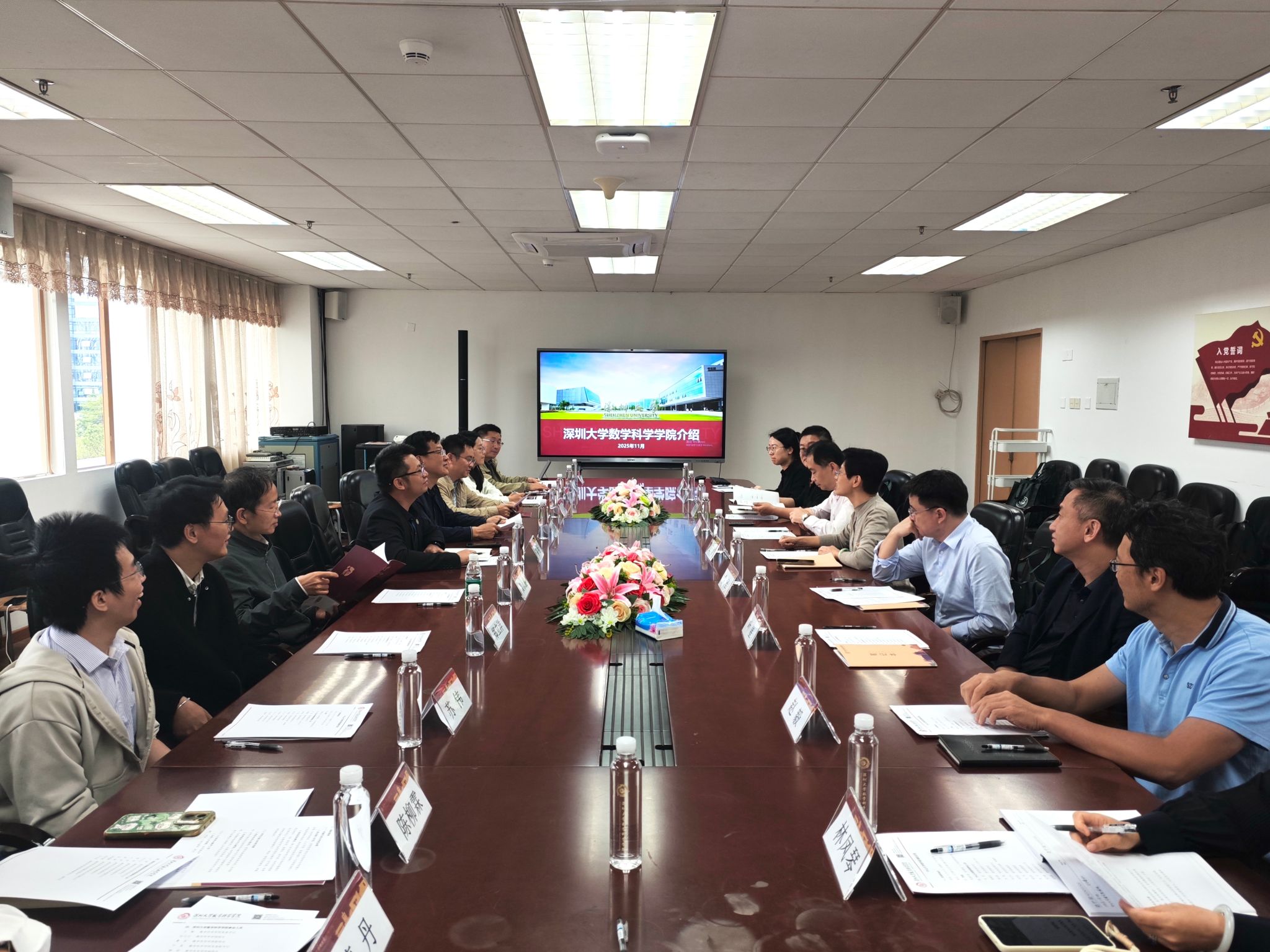
The Dean of Shenzhen University's School of Mathematical Sciences provided a systematic overview of the school's historical development, academic rankings, faculty composition, research teams, scientific advancement, and talent cultivation, showcasing achievements attained during its development. Secretary Wang Yu detailed progress and outcomes in various initiatives under Party-building leadership, including the innovative implementation of the five “1” work mechanisms, the establishment of the “Warm-Hearted Workshop” Party-building brand, and the robust advancement of the “One Integration, Two Highs” strategy.
Secretary Li Rui of Sun Yat-sen University's School of Science expressed gratitude for the warm reception and outlined the School's efforts in Party conduct and integrity building, along with the status of its Party member workforce. Yin Chaoyang, Acting Vice Dean of the School of Science at Sun Yat-sen University, outlined the development journey of the school's mathematics and physics disciplines, detailing initiatives and achievements in faculty development, disciplinary platform construction, and talent cultivation. He emphasized that the school upholds its cultural ethos of “cultivating both virtue and talent, bridging theory and practice, uniting knowledge and action, and pioneering at the forefront,” while implementing the philosophy of “attracting talent through platforms, gathering talent through careers, and nurturing talent through industry-research collaboration.” This approach deeply commits to cultivating top-tier innovative talent in mathematics and physics.
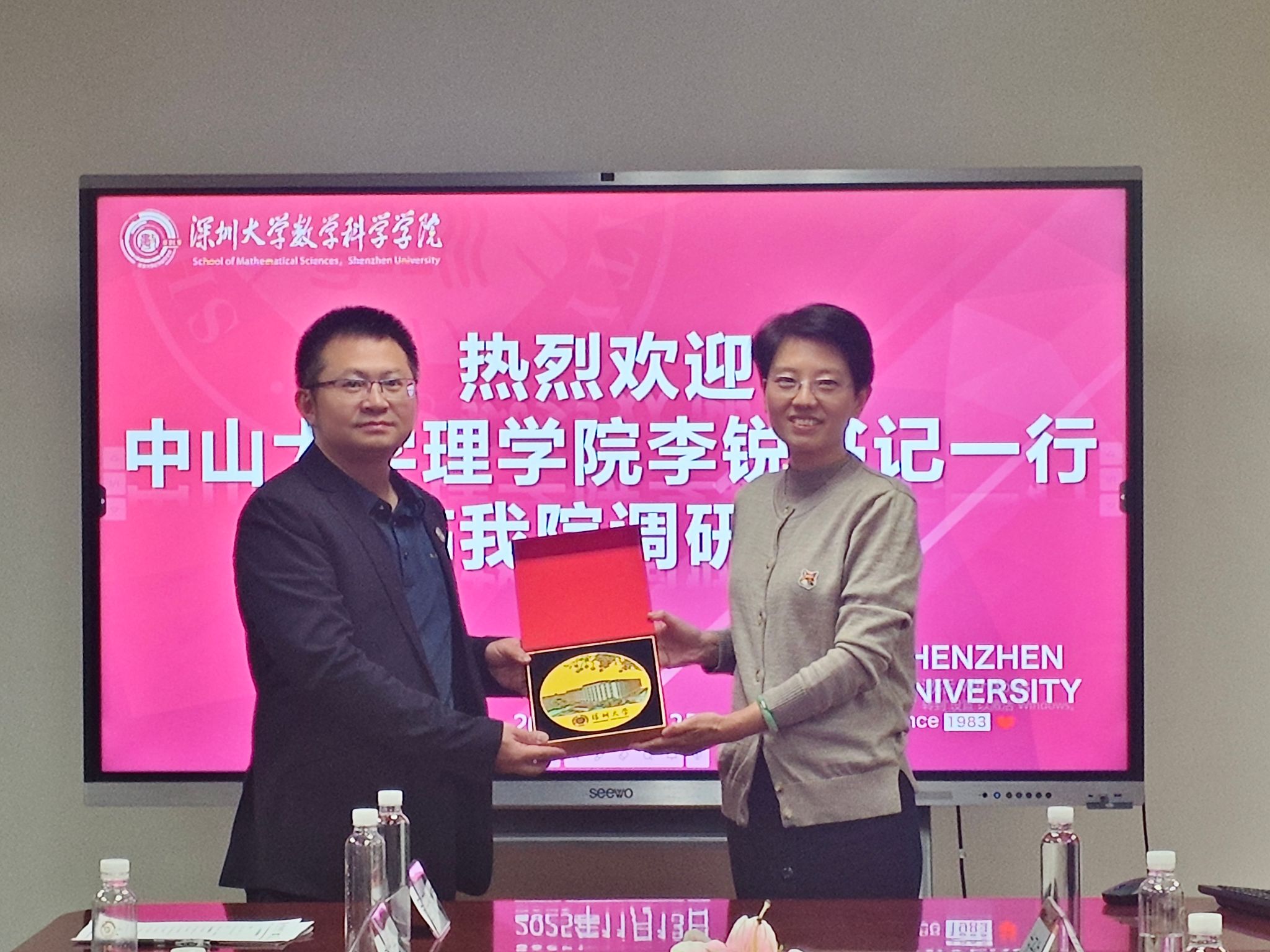
During the exchange session, both parties engaged in lively discussions on topics including Party-building leadership and college governance, disciplinary development and scientific innovation, talent cultivation and teaching reform, talent recruitment and faculty development, as well as extracurricular activities and student development.
This research visit not only deepened mutual understanding between the mathematics disciplines of both universities but also laid a solid foundation for future in-depth collaboration. Both sides expressed their commitment to leveraging this exchange as an opportunity to further strengthen disciplinary ties, learn from each other, and jointly advance the high-quality development of mathematics.



