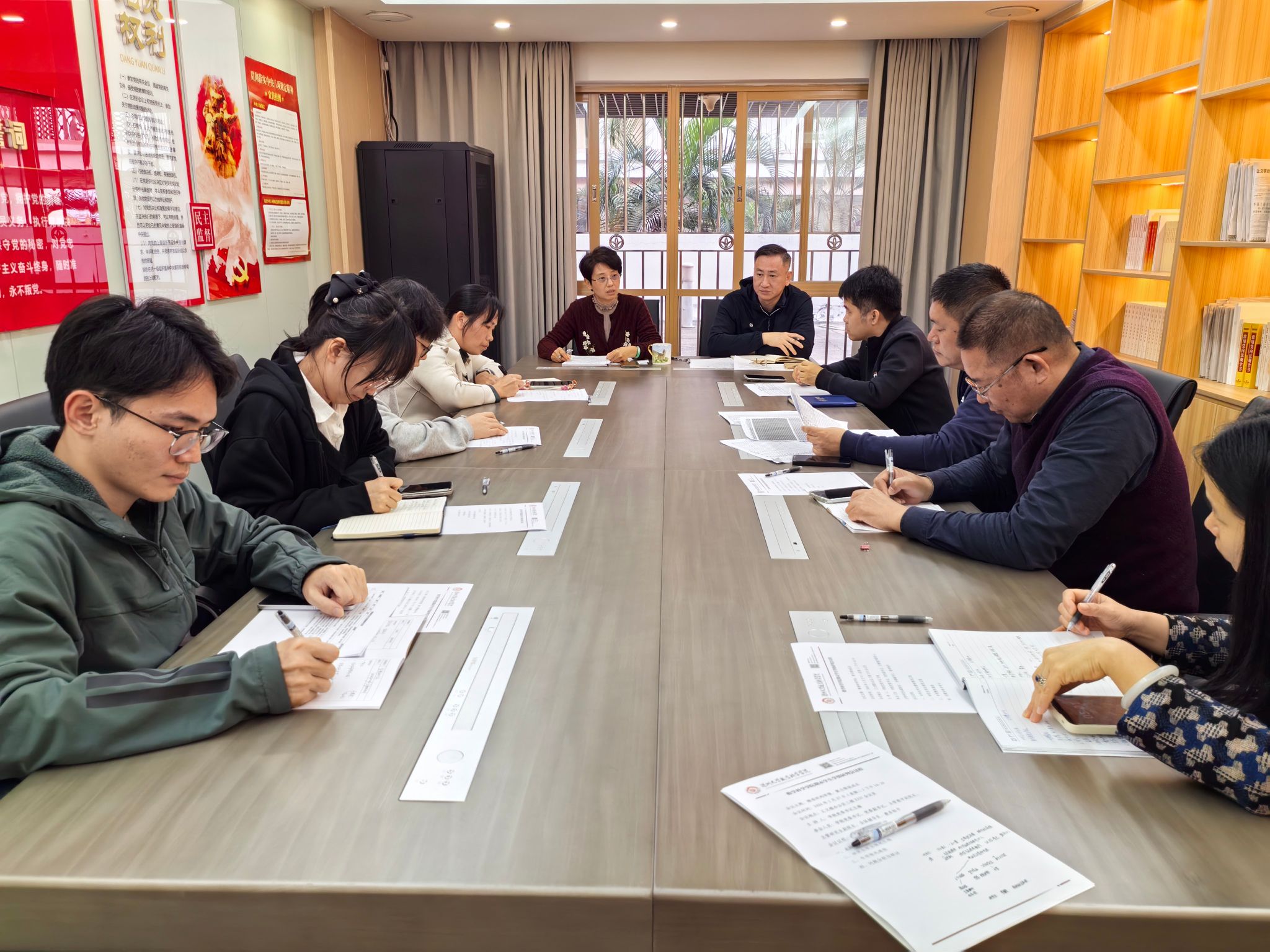
On the afternoon of January 27, 2026, the School of Mathematical Sciences convened a meeting to analyze and assess student academic performance for the first semester of the 2025–2026 academic year in Room 2331 of Huiwen Building. The meeting was chaired by Yu Wang, Secretary of the School Party Committee, and attended by Xing Ye, Deputy Secretary of the Party Committee; Yu Han, Vice Dean in charge of undergraduate education; Yaohua Hu, Vice Dean in charge of graduate education; all counselors; and undergraduate teaching secretaries. The meeting's theme was: Precise Assessment of Student Learning Progress, Focused Support for Growth.
Secretary Yu Wang first conveyed the university's latest requirements regarding academic management and academic culture development. She emphasized that student academic development is central to talent cultivation, stressing the necessity of adhering to a “student-centered” approach. This involves integrating the efforts of academic affairs, student affairs, and faculty advisors to build a comprehensive education system encompassing all members, the entire process, and all dimensions, thereby effectively enhancing the effectiveness of academic management. Deputy Secretary Xing Ye stressed the need to meticulously review the specific circumstances of academically struggling students requiring attention and care. This involves creating detailed records, defining support directions, assigning responsible personnel, and strengthening home-school collaboration mechanisms to consolidate educational synergy. Subsequent efforts will advance gradually through “individualized support plans.” Vice Dean Yu Han outlined teaching and curriculum reform measures related to academic support, particularly optimizing course teaching strategies. He stressed aligning with student learning needs, strengthening core course development, and addressing challenges in mathematics instruction. Vice Dean Yaohua Hu reported on the overall academic status of graduate students and the specific circumstances of those facing difficulties. He introduced proposed countermeasures for graduate students encountering issues such as inability to complete theses, delayed graduation, and communication barriers with advisors. Undergraduate Teaching Secretary Guifang Tan reported on undergraduate performance this semester, highlighting issues like elevated failure rates in certain core courses. Counselor Fangdan Han analyzed the academic trajectories of students with low GPAs, particularly those facing graduation delays, and discussed current academic culture bottlenecks within the Excellence Program. Teacher Yichong Sun outlined plans for personalized winter break support to address academic weaknesses. Xiaojun Xiao and Xiaoshan Zhong jointly analyzed case studies of failing students, identifying root causes related to attendance, family background, and study habits, while sharing effective approaches from previous support efforts.
In the concluding remarks, Secretary Yu Wang emphasized seven key requirements: First, refine the talent development system to keep pace with the times; second, deepen teaching reforms to enhance classroom engagement and effectiveness; third, explore diversified learning resource provision; fourth, establish a routine teaching feedback mechanism; fifth, promote an academic culture that values learning and progress; sixth, intervene early and provide timely support for students on academic warning; seventh, strengthen psychological support to foster a positive and healthy educational environment.



