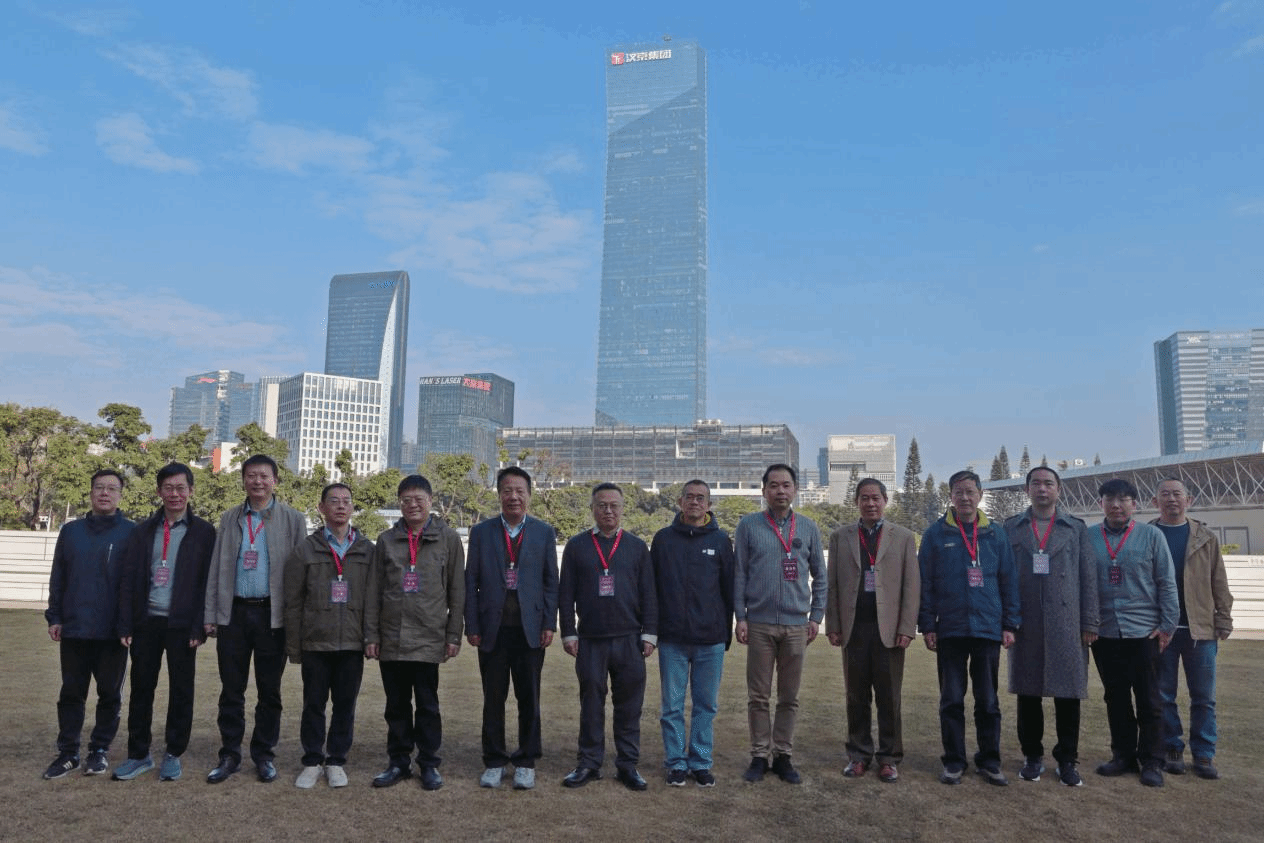
On January 24-25, 2026, the “National Key R&D Program - Mathematics and Applied Research - Key Special Project Exchange Meeting,” hosted by the School of Mathematical Sciences at Shenzhen University, was successfully held at the Yuehai Campus of Shenzhen University. The conference featured two national key R&D project teams: “Topological and Statistical Properties of Low-Dimensional Dynamical Systems” led by Academician Shen Weixiao from Fudan University, and “Research on Frontier Problems in Operator Theory and Operator Algebras” led by Professor Wang Kai from Fudan University. Thirteen experts from the project teams at Fudan University, Sichuan University, Zhejiang University, and Shenzhen University participated in the event.
Academician Shen Weixiao from Fudan University delivered the opening address. He expressed gratitude to the host, the School of Mathematical Sciences at Shenzhen University, for their thoughtful arrangements. He also highlighted the inherent and profound connection between dynamical systems and operator theory, expressing hope that the exchange would deepen mutual understanding between the two research groups, strengthen collaboration, and spark new ideas. Professor Zhang Xu from Sichuan University illustrated the link between operator theory and dynamical systems using examples from his own research.
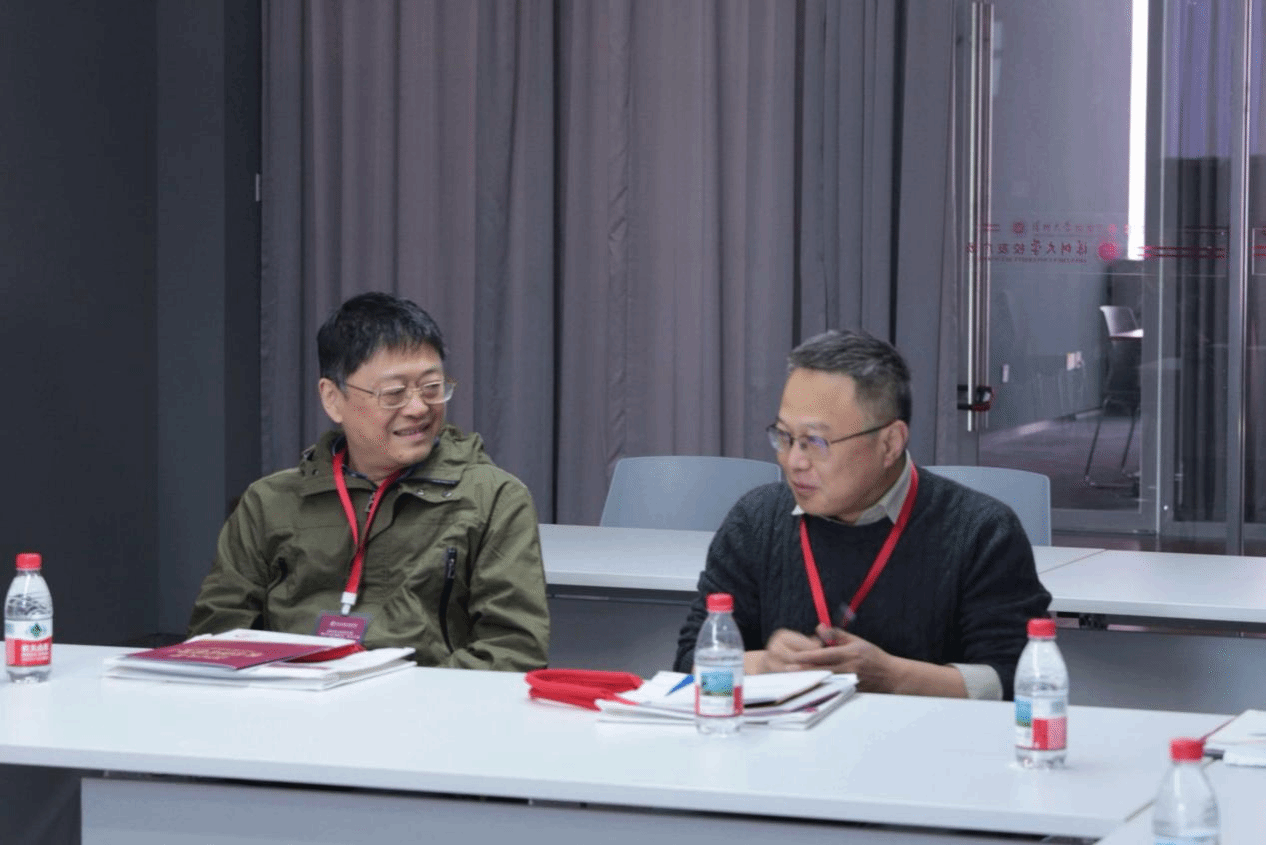
Subsequently, the Dean of the School of Mathematical Sciences at Shenzhen University extended a warm welcome to all experts and scholars on behalf of the university, presenting the school's recent achievements and future development plans.
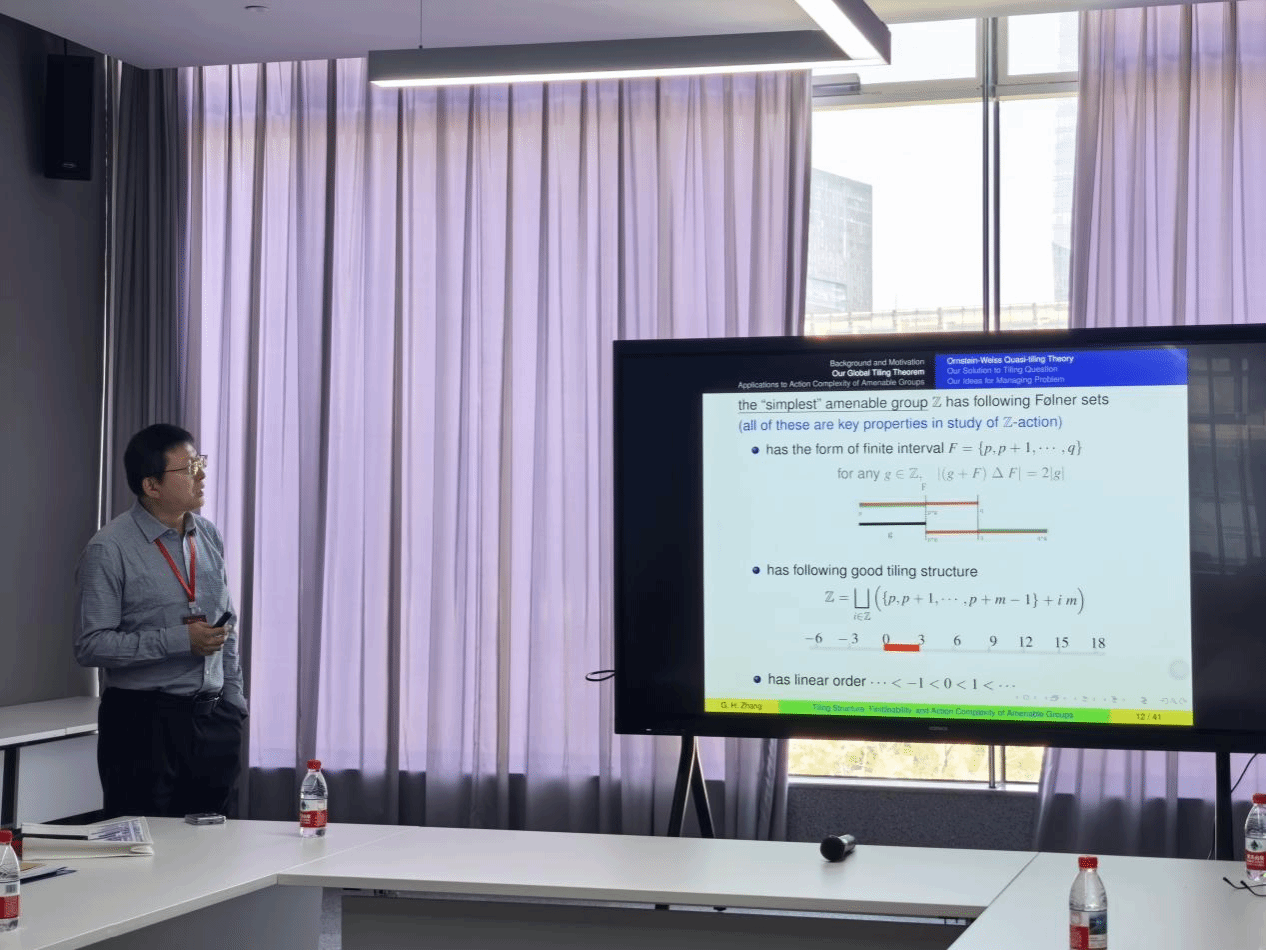
The conference featured four presentations covering amenable group dynamical systems, the expansion coefficient problem, parameter spaces of polynomial systems, and infinite-dimensional analysis. Participants shared project achievements and progress, fostering lively discussions and a vibrant academic atmosphere.
This successful conference strengthened academic ties between dynamical systems and operator algebra, promoted collaboration and innovation within the academic community, and advanced the development of both key research projects.