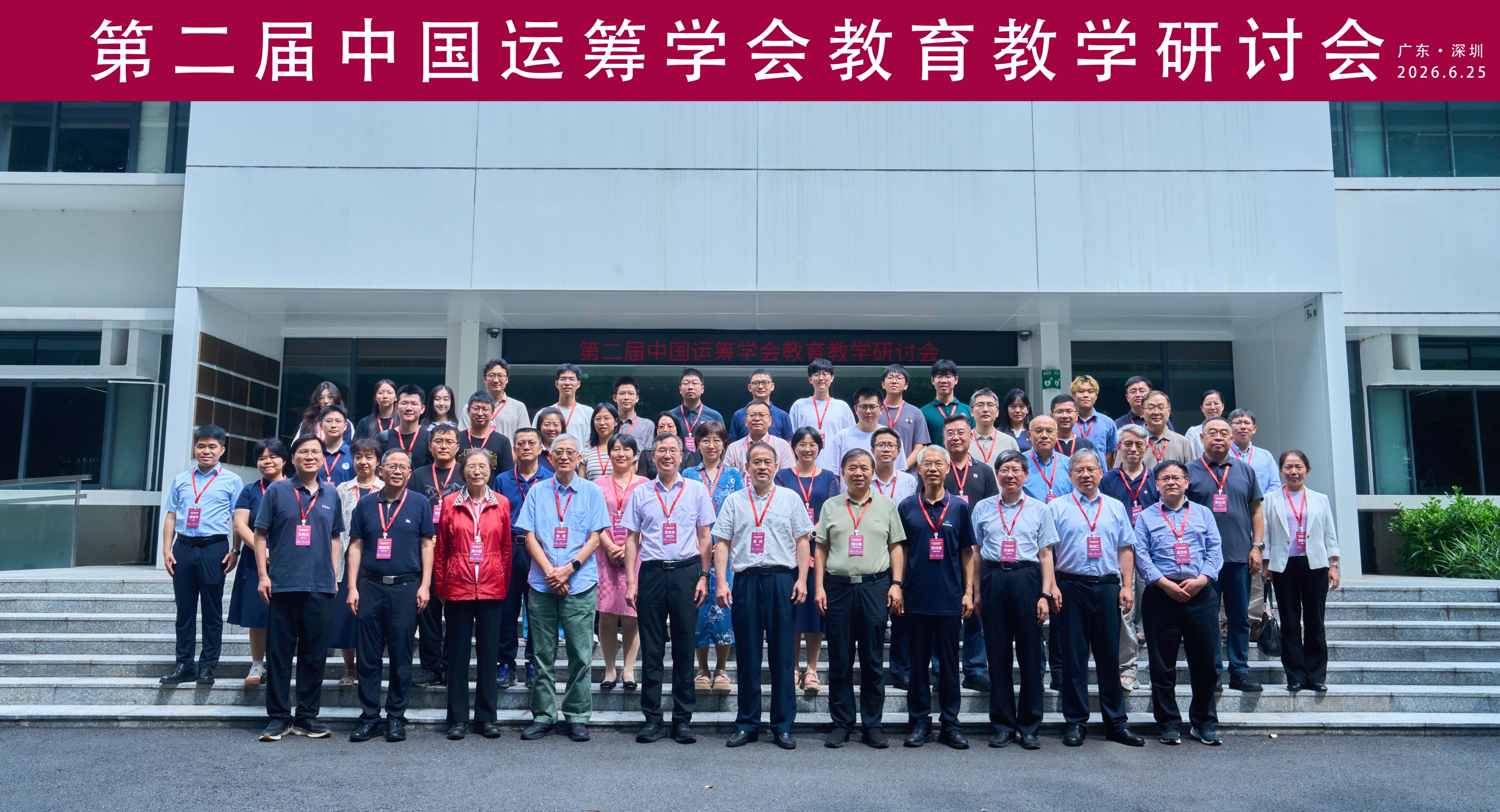
On the shores of the South China Sea, in the height of summer in Shenzhen, experts gathered to discuss operations research and explore new horizons in education. On June 25, 2026, the Second Educational and Teaching Symposium of the Chinese Operations Research Society was held at Shenzhen University. Organized by the Education Working Committee of the Chinese Operations Research Society and co-hosted by the School of Mathematical Sciences at Shenzhen University and the Guangdong Operations Research Society, the symposium featured discussions on core topics such as curriculum development, innovation in teaching models, and experiences in cultivating talent at various levels. Experts and scholars from more than 30 universities across the country attended the conference. The opening ceremony was presided over by Hu Yaohua, Vice Dean of the School of Mathematical Sciences at Shenzhen University.
Yuan Yaxiang, Academician of the Chinese Academy of Sciences; Zhou Hui, Vice President of Shenzhen University; Guo Tiande, Vice Chairman of the Chinese Operations Research Society; Yao Zheng’an, Chairman of the Guangdong Operations Research Society; and Wen Zaiwen, Director of the Education Committee of the Chinese Operations Research Society, delivered speeches respectively.
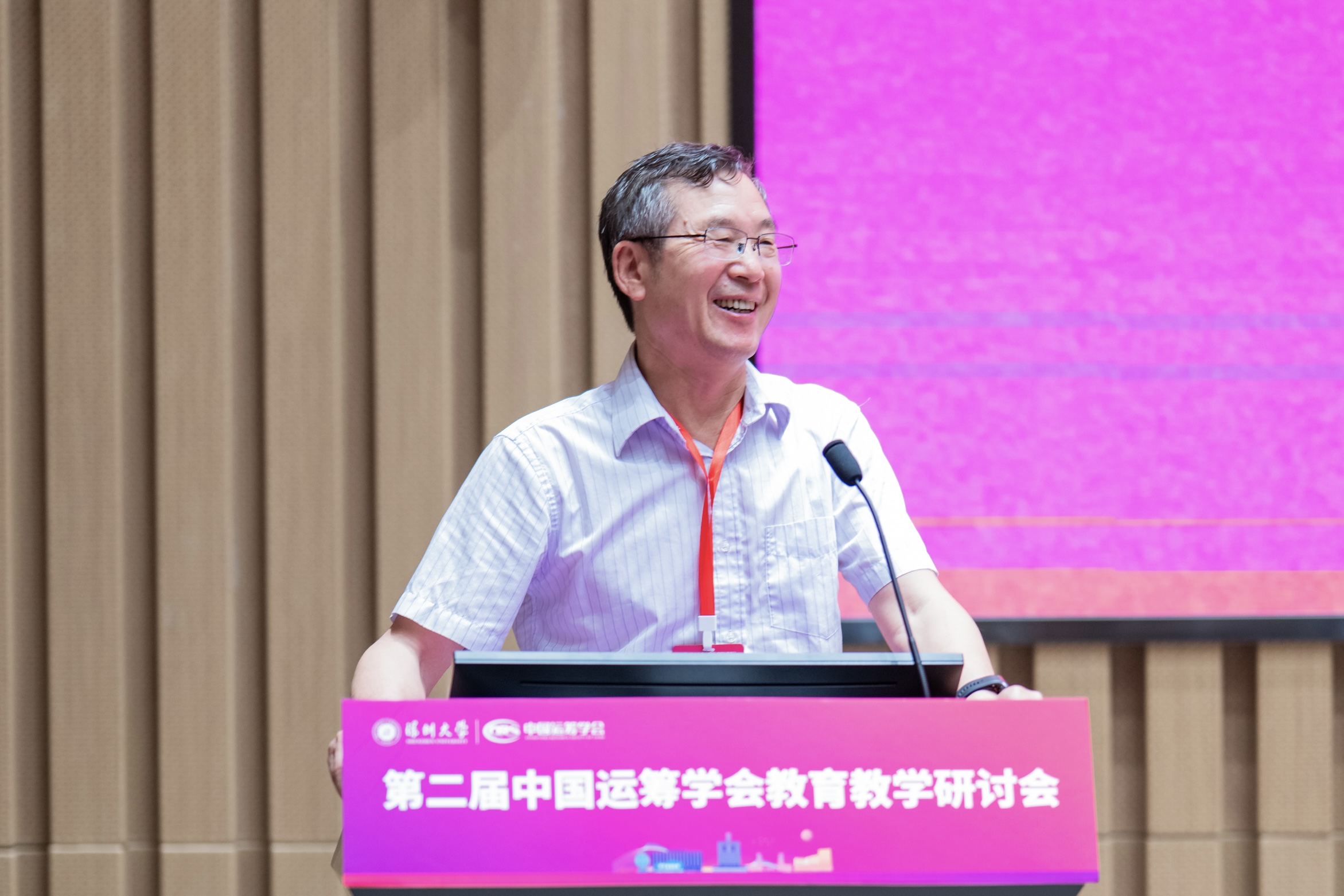
Academician Yuan Yaxiang emphasized the strategic importance of operations research education in the era of artificial intelligence; Vice President Zhou Hui elaborated on the broad applicability of operations research—from household decision-making to national governance—and its potential for integration with AI and situational awareness; Professor Guo Tiande proposed recommendations for the development of operations research from the perspective of interdisciplinary integration and emphasized its critical role in AI research and development; Professor Yao Zheng’an, drawing on the realities of the Guangdong-Hong Kong-Macao Greater Bay Area, revealed the broad prospects for operations research in serving emerging industries such as new energy, intelligent connected vehicles, the low-altitude economy, and biomanufacturing; Professor Wen Zaiwen introduced the core functions of the Education Committee, as well as its two regular mechanisms: the “Dao·Li” course brand and the education and teaching seminars.
Following the opening ceremony, the first session of plenary presentations officially began. Several renowned scholars shared their research findings and practical insights on talent development and educational reform in operations research.
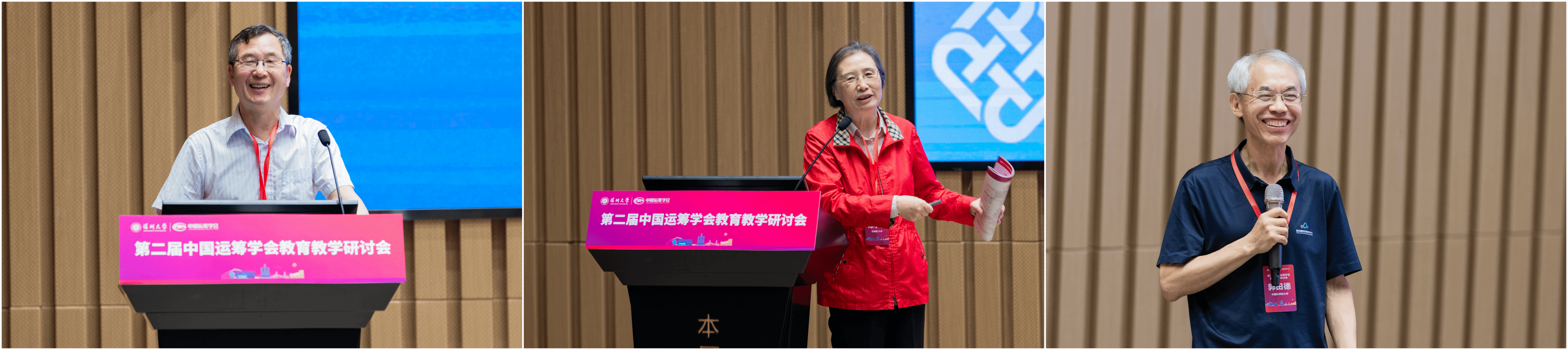
Academician Yuan Yaxiang pointed out that a solid foundation in mathematics and optimization theory is the cornerstone for operations research professionals, and this foundation must be built through the study of classic literature and rigorous deductive reasoning; at the same time, graduate students should be encouraged to engage in in-depth interdisciplinary work with fields such as data science, artificial intelligence, and management science to enhance their ability to find innovative solutions. The report also shared experiences in providing differentiated guidance at different stages—including doctoral students, postdoctoral researchers, and young faculty—offering a reference for talent development centered on “a strong foundation, broad interdisciplinary integration, and a focus on innovation.” Professor Chen Xiaojun shared the experience of The Hong Kong Polytechnic University in incorporating Work-Integrated Education (WIE) into required undergraduate courses, which helps students achieve a threefold transformation: from mathematical knowledge to professional competence, from the university classroom to the workplace, and from individual growth to organizational collaboration. He noted that the curriculum will continue to be optimized to meet the demand for high-level quantitative talent in the AI era. Professor Guo Tiande proposed a systematic overhaul across four dimensions—knowledge structure, competencies and literacy, teaching methods, and industry-academia integration—thereby charting a course for reform in operations research education.
Following the first plenary session, the conference featured breakout discussions organized around three themes: “Video Recording and Promotion of Operations Research Courses,” “Design of Operations Research Courses and Micro-Majors,” and “Opportunities and Challenges in Operations Research Education in the AI Era.” Participants shared reform experiences from their respective universities and engaged in discussions on addressing the challenges posed by AI.
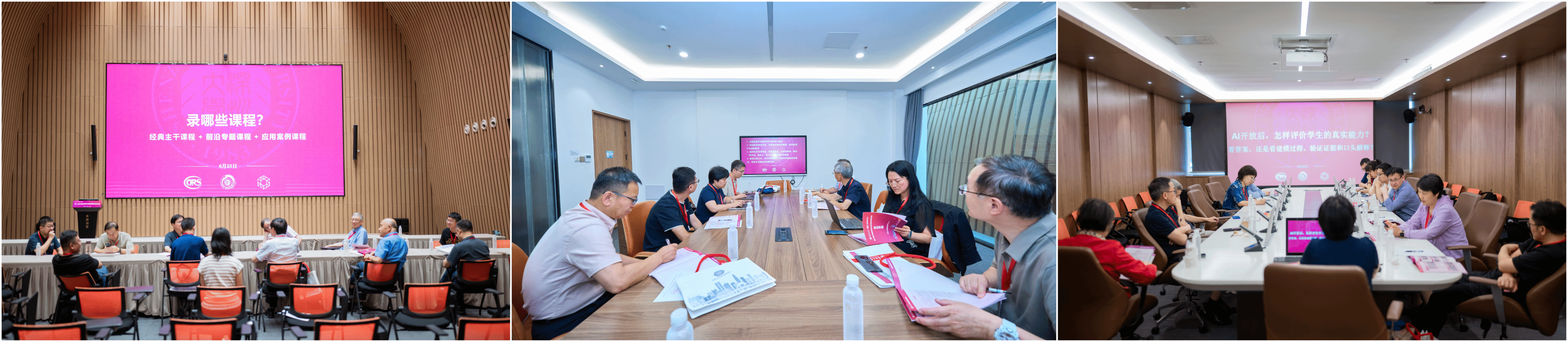
Following the breakout sessions, the second session of plenary presentations began.
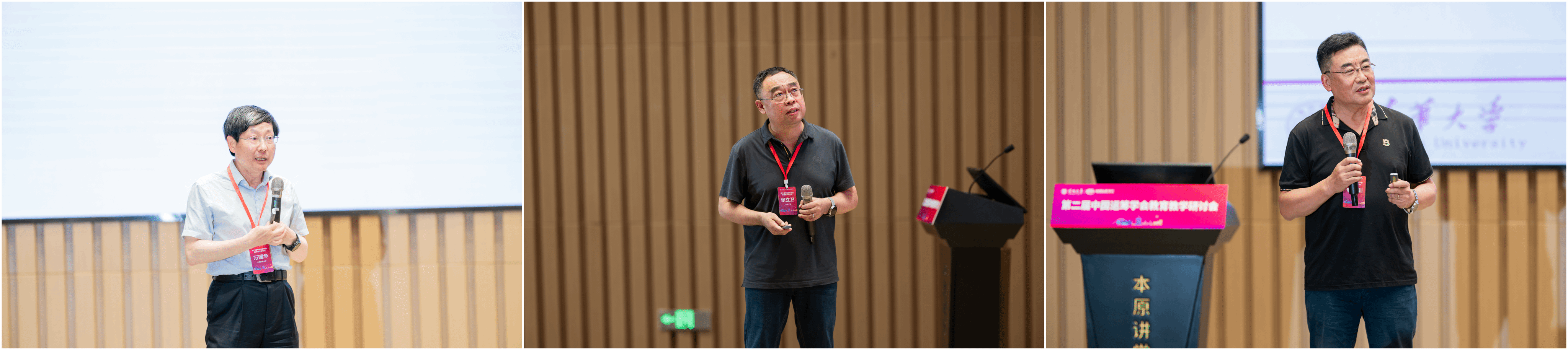
Professor Wan Guohua discussed the far-reaching impact of generative AI on operations research education and demonstrated the integration of AI tools in the classroom through two specific teaching examples. Professor Zhang Liwei, using the graduate program in operations research at Dalian University of Technology as a case study, shared his exploratory thoughts on building a curriculum framework comprising three components: analytical courses on continuous optimization, theoretical foundation courses, and courses on algorithms and practice. Professor Xing Wenxun provided an overview of the curriculum structure for mathematics and operations research at Tsinghua University, as well as the requirements and training components for graduate students, and offered constructive suggestions for optimizing operations research courses.
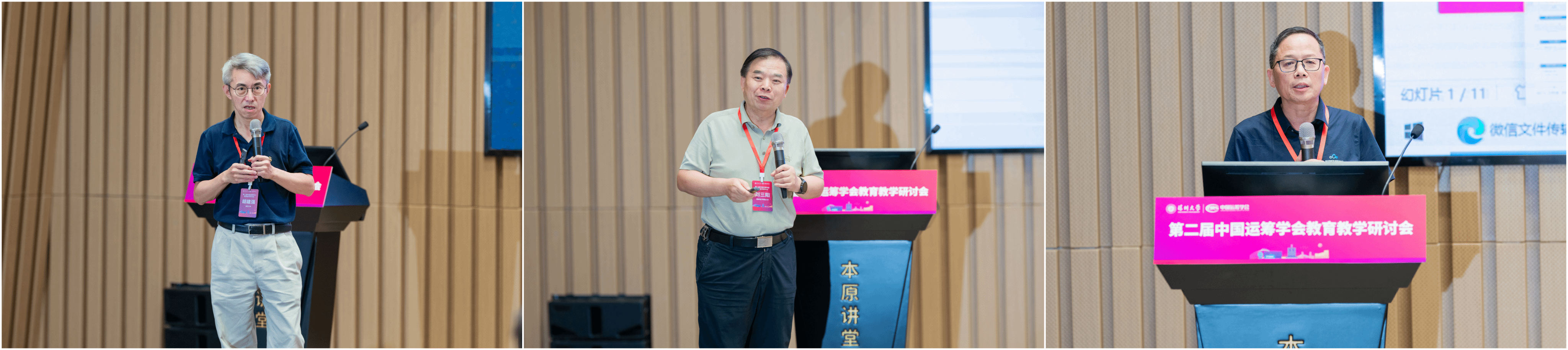
Professor Hu Jianqiang shared his reflections and insights gained over many years on how to inspire doctoral students to develop a genuine passion and dedication to research. Professor Liu Sanyang began by examining several key relationships in education and teaching, discussing the path from teaching research to research-based teaching, and offered insights into operations research education based on his own experience. Professor Yang Xinmin chaired the session on summarizing and discussing the topics, guiding the participating experts in an in-depth exchange on the content of the presentations, and systematically outlining and looking ahead to key directions for reform in operations research education and teaching.
This symposium brought together numerous experts in the field of operations research education from across the country, providing important insights for advancing educational reform and cultivating high-caliber operations research talent for the new era. The Education Committee of the Chinese Operations Research Society will continue to explore new approaches in areas such as talent development, curriculum development, teaching seminars, faculty training, and textbook development, striving to promote the high-quality development of operations research education in China.