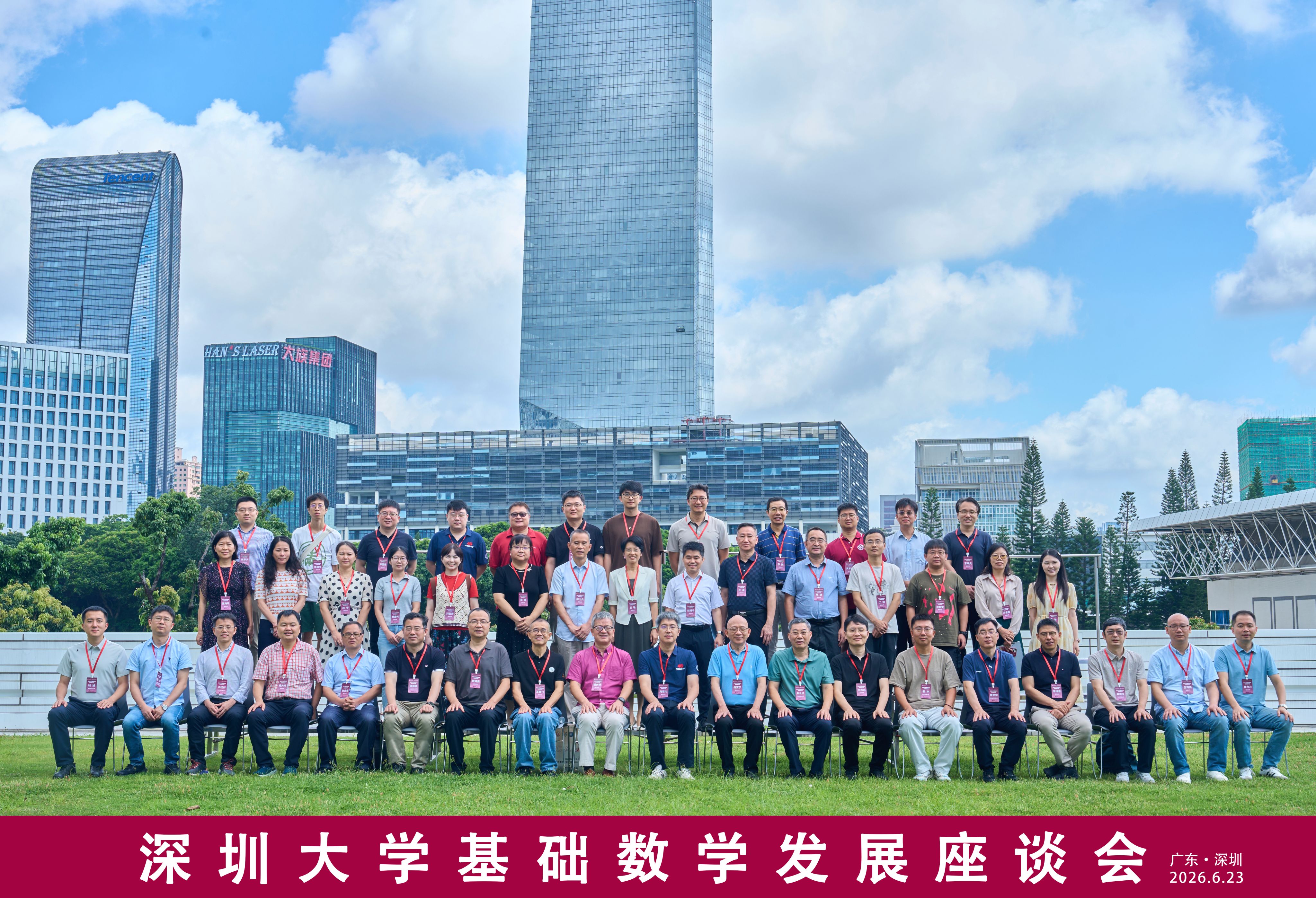
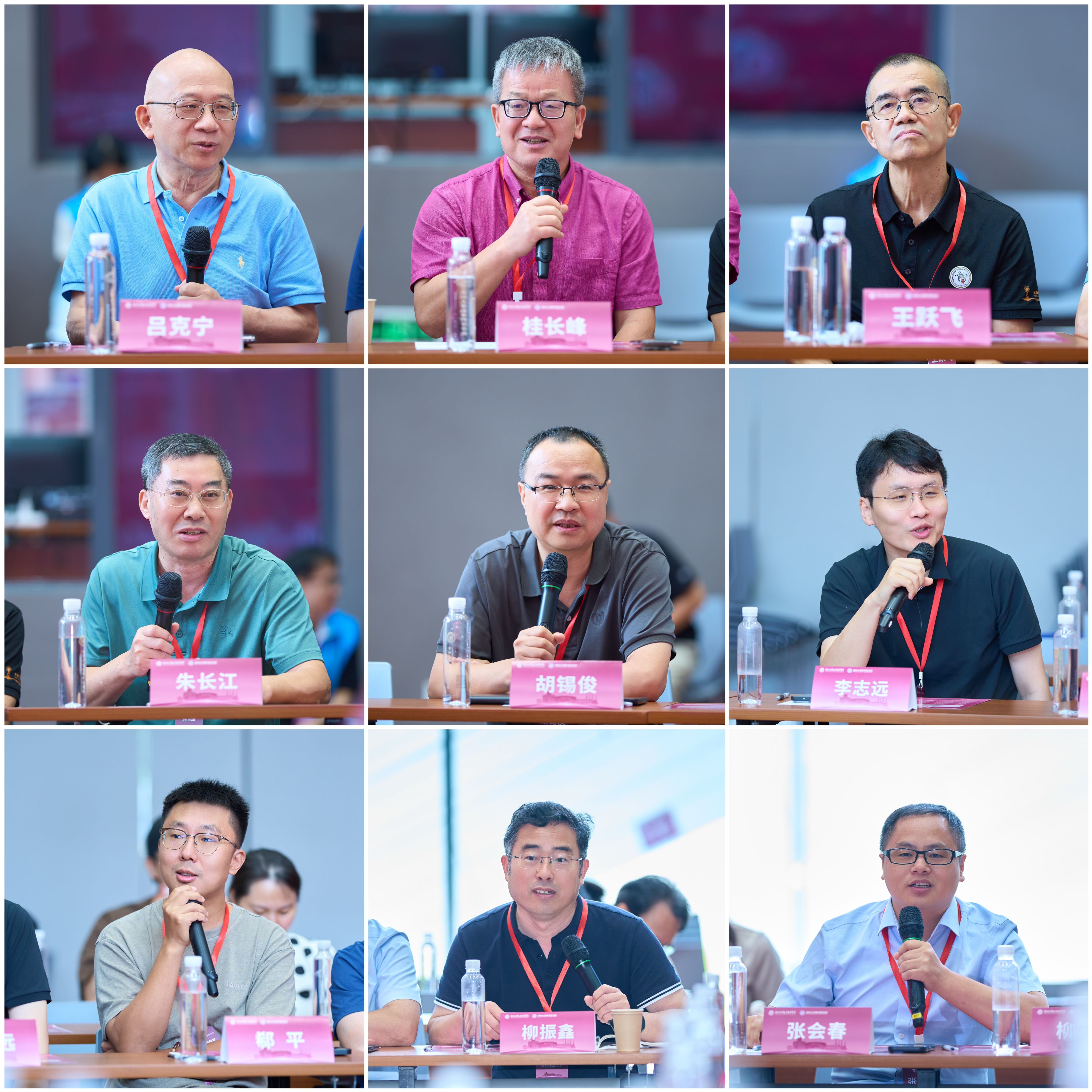
On June 23, 2026, Shenzhen University held a symposium on the development of the discipline of pure mathematics at the Yuehai Campus. Renowned experts and scholars from more than ten universities and research institutions across the country were invited to attend, including Professor Liu Ruochuan—an academician of the Chinese Academy of Sciences, vice chairman of the Chinese Mathematical Society, and dean of the School of Mathematical Sciences at Peking University—as well as Professor Lü Kening from Sichuan University, Professor Gui Changfeng from the University of Macau, and Professor Zhu Changjiang from South China University of Technology. Professor Wang Yuefei, Honorary Dean of the School of Mathematical Sciences at Shenzhen University; Wang Yu, Party Secretary of the School; Professor Hu Yaohua, Vice Dean; and other school leaders and key faculty members jointly participated in the meeting. The meeting featured in-depth discussions on the construction and development of the discipline of pure mathematics, aiming to build consensus, pool resources, and promote the high-quality development of the discipline.
This symposium was held at a time when the entire nation is deeply studying and implementing the spirit of General Secretary Xi Jinping’s important speech delivered at the Symposium on Strengthening Basic Research. Previously, on the morning of April 30, General Secretary Xi Jinping attended the Symposium on Strengthening Basic Research in Shanghai and delivered an important speech. At the symposium, Academician Liu Ruochuan spoke as the sole representative of the basic sciences, reflecting the high priority the nation places on basic disciplines such as mathematics. The spirit of this important meeting has charted the course forward and provided crucial guidance for the development of the basic mathematics discipline at Shenzhen University.
· “Top Priority” Study Session
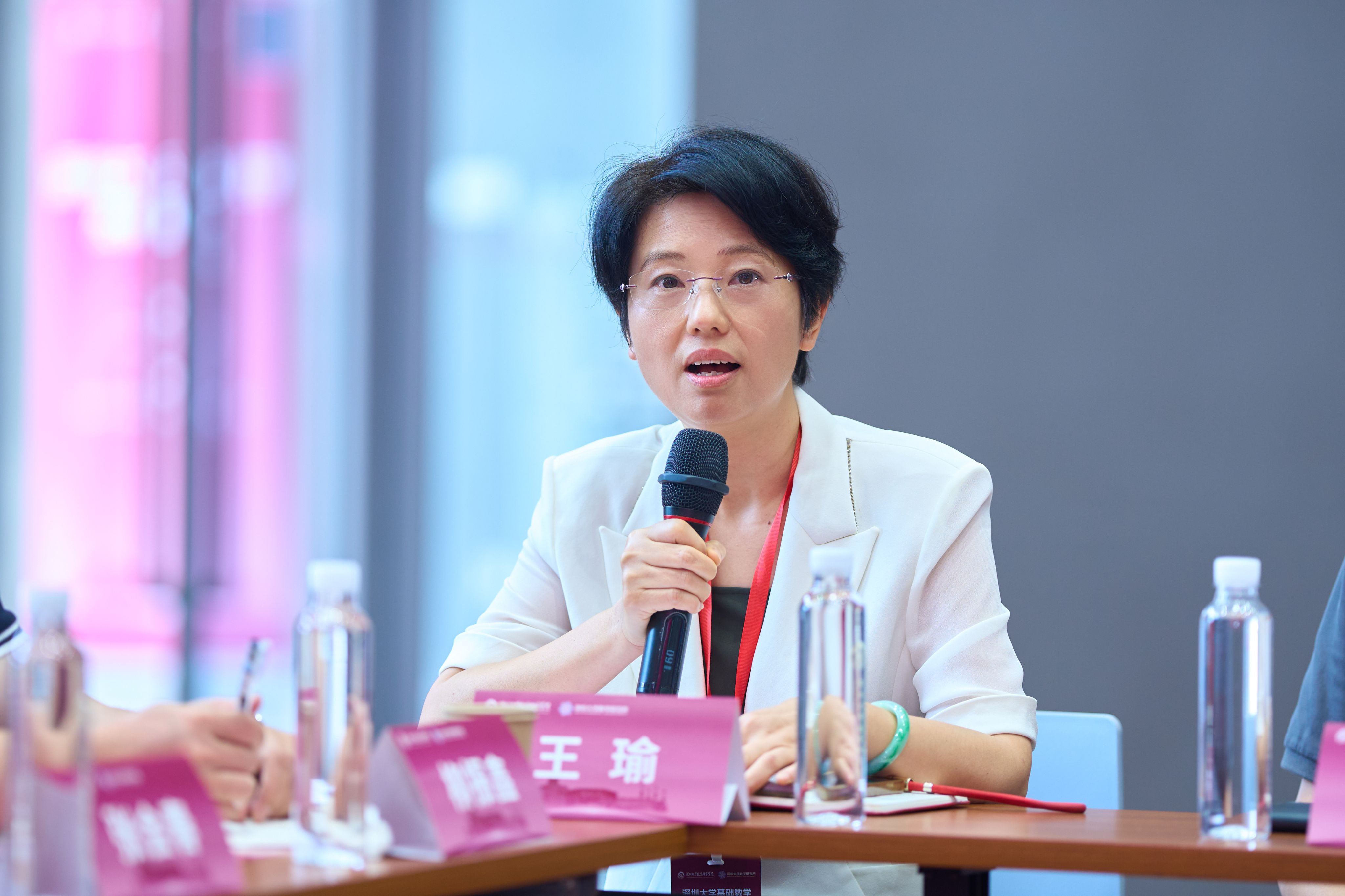
Secretary Wang Yu Led the Study of “General Secretary Xi Jinping’s Important Speech at the Symposium on Strengthening Basic Research”
Secretary Wang Yu led the study of General Secretary Xi Jinping’s important speech delivered at the symposium on strengthening basic research. General Secretary Xi Jinping pointed out that “basic research is the source of the entire scientific system and the master key to all technological problems.” Drawing on the School’s actual circumstances, she put forward four implementation proposals, including upholding the correct political direction and adhering to the principle of fostering virtue through education; strengthening areas of strength such as complex analysis, partial differential equations, and operations research and optimization, while promoting interdisciplinary research between mathematics and artificial intelligence; relying on the “Outstanding Innovation Experimental Zone” to enhance the training of undergraduates and graduate students and to attract and cultivate high-caliber talent; establishing a long-term evaluation system centered on original value; and promoting an academic ethos that embraces the patience required for long-term research. She called on all members of the mathematics community to keep the “greater good of the nation” in mind and to contribute to the university’s “Double First-Class” initiative and the nation’s pursuit of high-level scientific and technological self-reliance and self-strengthening.
·Conveying Key Messages
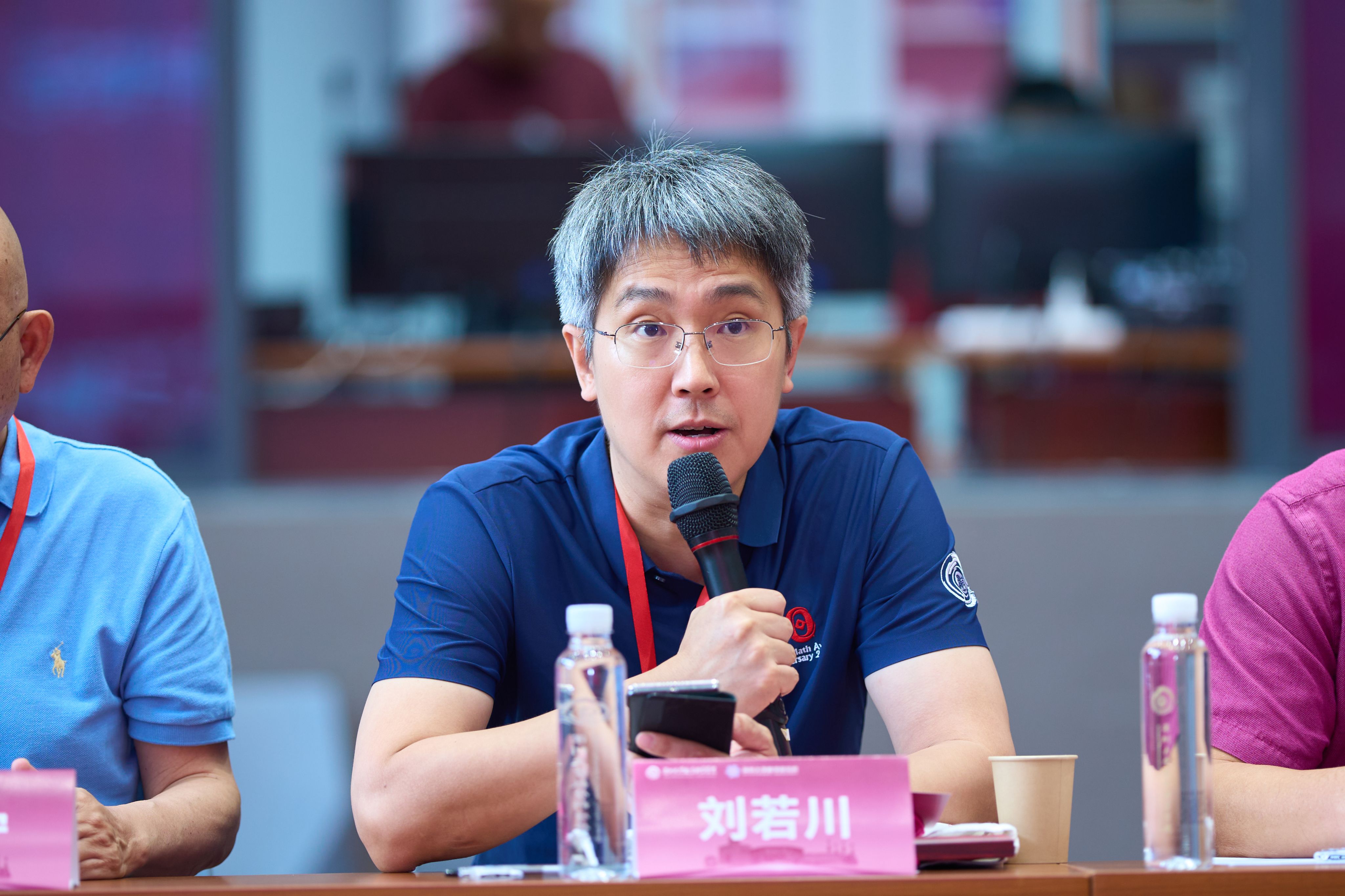
Academician Liu Ruochuan Conveys the Key Messages from the Symposium on Strengthening Basic Research
Academician Liu Ruochuan shared his insights from the symposium. He pointed out that General Secretary Xi Jinping emphasized the need to “strengthen overall planning and top-level design, and optimize the systematic layout of basic research. We must adhere to the strategic orientation of the ‘Four Orientations’ and further clarify the main directions and key areas of basic research.” It is essential to build a research ecosystem that supports long-term disciplines such as mathematics, improve scientific evaluation and incentive mechanisms, ensure the sustained conduct of basic research requiring patience and perseverance, and encourage researchers to tackle major challenges and boldly explore uncharted territory. We must confront head-on the shortcomings in China’s original theories, major conjectures, and awards, and strengthen innovation at the source. We must broaden our global perspective in talent recruitment, enhance the appeal of domestic universities, and establish a scientific training system. We should promote interdisciplinary integration of mathematics with AI, manufacturing, and medicine; delve into real-world scenarios; distill key theories from practical problems; and drive innovation. We must accelerate the development of an autonomous and controllable AI security technology system, strengthen explainability, generalization capabilities, and security safeguards to mitigate risks. With the perseverance of “a decade to hone a sword,” we will propel the basic disciplines from the plateau to the summit.
· Report on Disciplinary Development
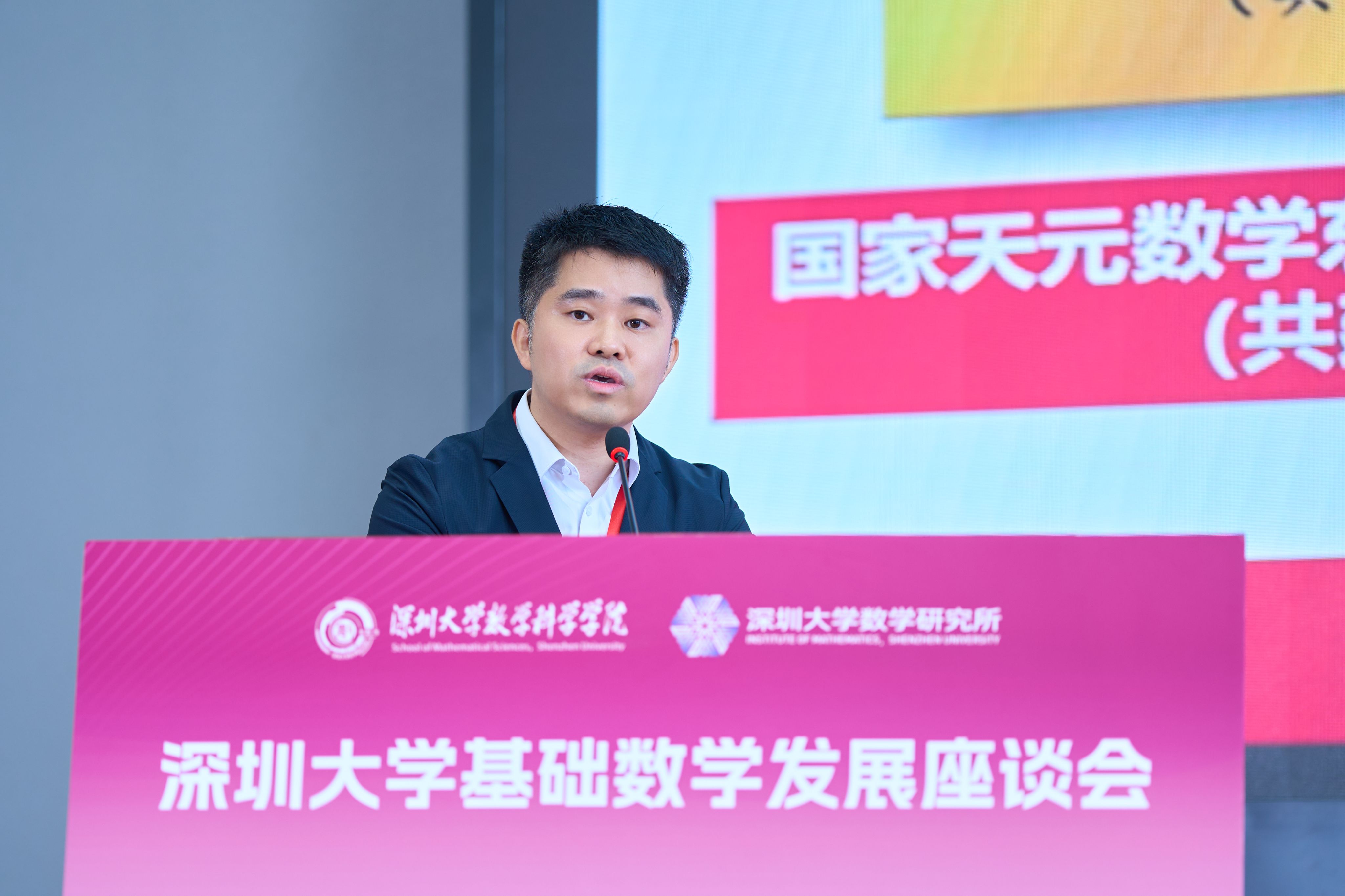
Vice Dean Hu Yaohua Reports on the Development of the Basic Mathematics Discipline at Shenzhen University
Vice Dean Hu Yaohua delivered a brief report on the development of the basic mathematics discipline at Shenzhen University. He outlined the school’s historical development, progress in discipline construction, organizational structure, and faculty profile, highlighting the research achievements of various basic mathematics research teams in areas such as complex analysis, differential equations and their applications, and algebra and number theory, as well as the school’s key approaches to cultivating top-tier talent in basic disciplines. He noted that the school still faces certain gaps compared to “Double First-Class” universities in terms of research directions, faculty, talent development, and scientific research. The school will use this symposium as an opportunity to further refine its research directions, address its shortcomings, and drive new developments in the discipline of pure mathematics.
· Symposium on Discipline Development
Roundtable Discussion Among Experts and Scholars Builds Consensus on the Development of Pure Mathematics Research
Academician Liu Ruochuan presided over the symposium on the development of pure mathematics. Participating experts reached several points of consensus regarding discipline development, talent cultivation, and scientific innovation. To address the impact of artificial intelligence on teaching, it is necessary to strengthen foundational training and solidify rigorous reasoning skills; a long-term, multi-dimensional evaluation system should be established to avoid over-reliance on metrics for promotions; Given the long cycles and high uncertainty inherent in basic research, it is essential to safeguard a research environment that allows for “sitting on the cold bench.” All branches of pure mathematics should develop in a coordinated manner, expanding the enrollment of doctoral students and encouraging joint postdoctoral training programs. By leveraging Shenzhen’s industrial strengths and computational power, the university should focus on key areas such as the mathematical foundations of AI, conduct organized research, and drive theoretical innovation through real-world problems. Attendees expressed their commitment to upholding the original aspiration of serving the nation through scientific research, leveraging the exemplary and leading role of a high-level university in the Pioneer Demonstration Zone, and contributing to the development of China as a powerhouse in education and science and technology. The consensus reached at the meeting, grounded in Shenzhen University’s practical experience and addressing widespread challenges, provides valuable reference for the development of mathematics disciplines at universities nationwide.
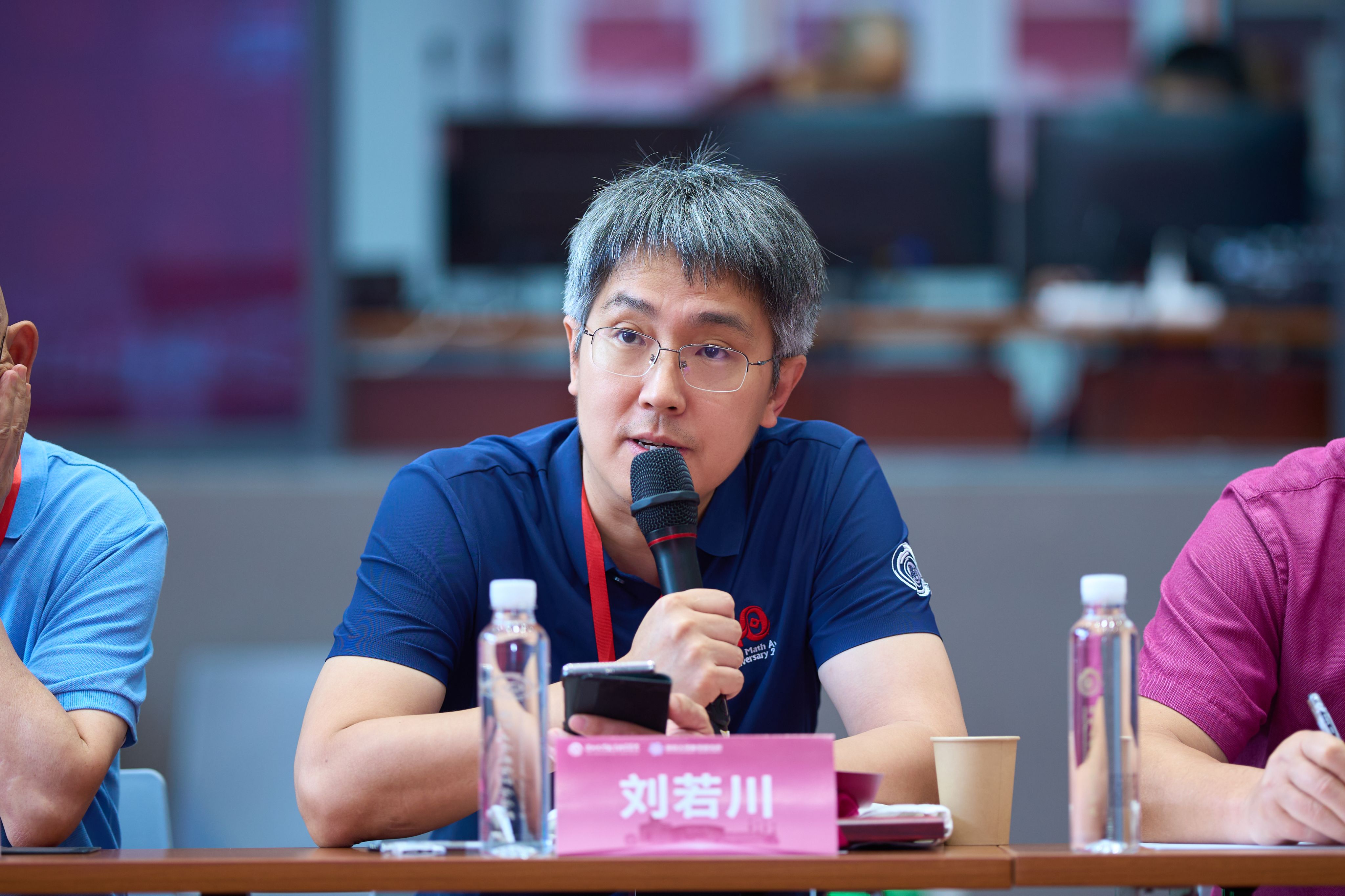
In his concluding remarks, Academician Liu Ruochuan noted that this symposium served as an in-depth study of General Secretary Xi Jinping’s important discourses, as well as a focused discussion and consensus-building session on the development of the basic mathematics discipline at Shenzhen University. As a pilot demonstration zone, Shenzhen is adjacent to the Greater Bay Area’s technology and industrial clusters and boasts abundant computing resources and a dynamic market environment, providing excellent conditions for the interdisciplinary integration of basic mathematics with fields such as artificial intelligence and industrial software. He suggested that Shenzhen University leverage its geographical advantages, focus on application-driven basic research, and encourage mathematicians to engage deeply with the front lines of industry to distill scientific problems from practical needs. At the same time, the university should draw on the internationalization experience of universities in Hong Kong and Macao, intensify efforts to recruit young talent from overseas, and build a diverse and inclusive academic ecosystem. He expressed his hope that the School would take this as a new starting point to optimize its disciplinary structure, deepen international cooperation, and demonstrate the unique value of mathematics in serving national strategies and regional development.
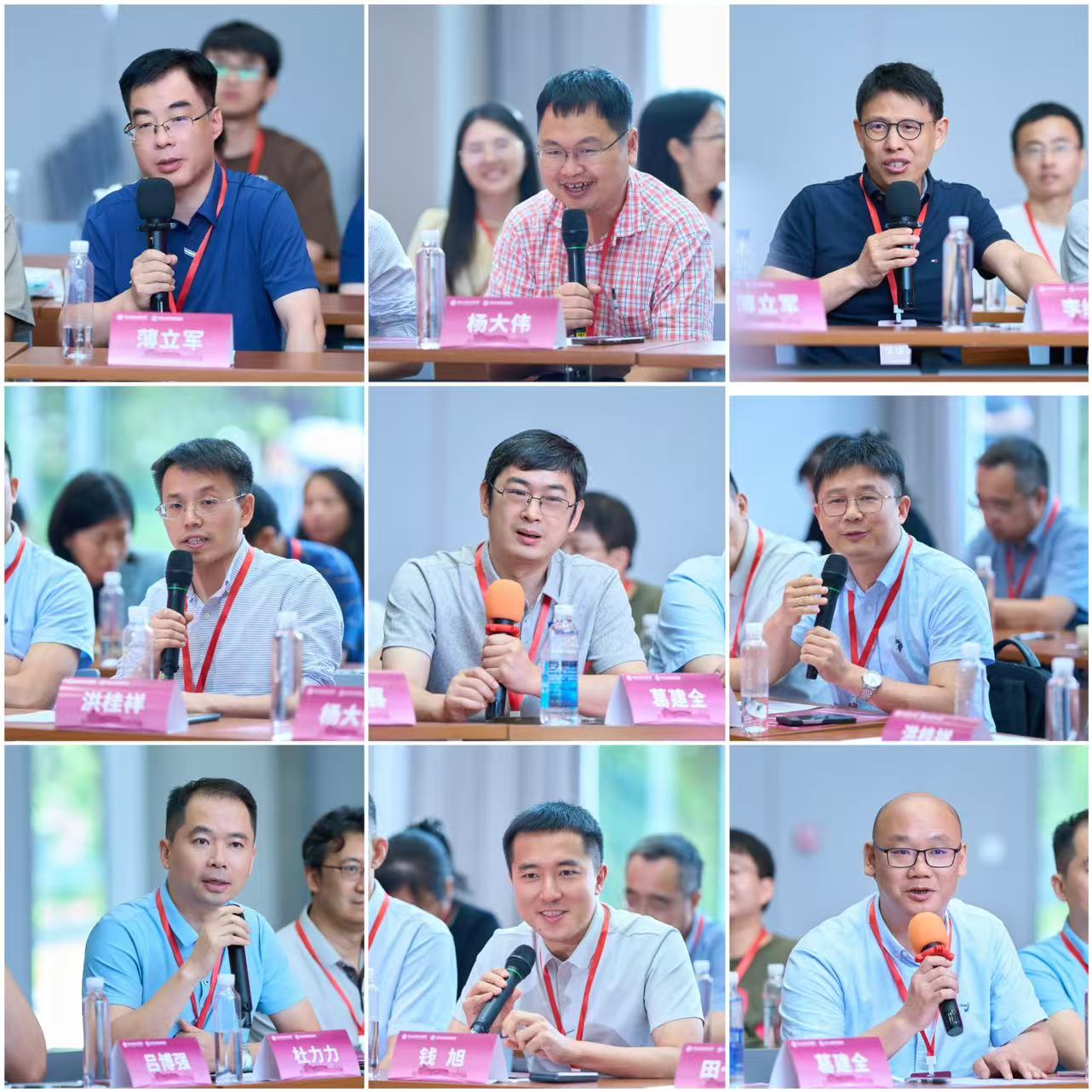
The convening of this symposium has played a positive role in helping the School of Mathematical Sciences at Shenzhen University further clarify the development direction of basic mathematics, build consensus on disciplinary development, and enhance its capacity for original innovation. Taking this as a new starting point, the School will thoroughly implement the spirit of General Secretary Xi Jinping’s important remarks on strengthening basic research, proactively align with national strategic needs and the development requirements of the Guangdong-Hong Kong-Macao Greater Bay Area, and forge ahead with determination in the vast field of basic mathematics. With unwavering academic confidence and a deep commitment to education, all faculty and students will devote themselves to tackling key challenges and persevere over the long term, contributing Shenzhen University’s strength to building a nation of mathematical excellence and achieving high-level self-reliance and self-strengthening in science and technology.